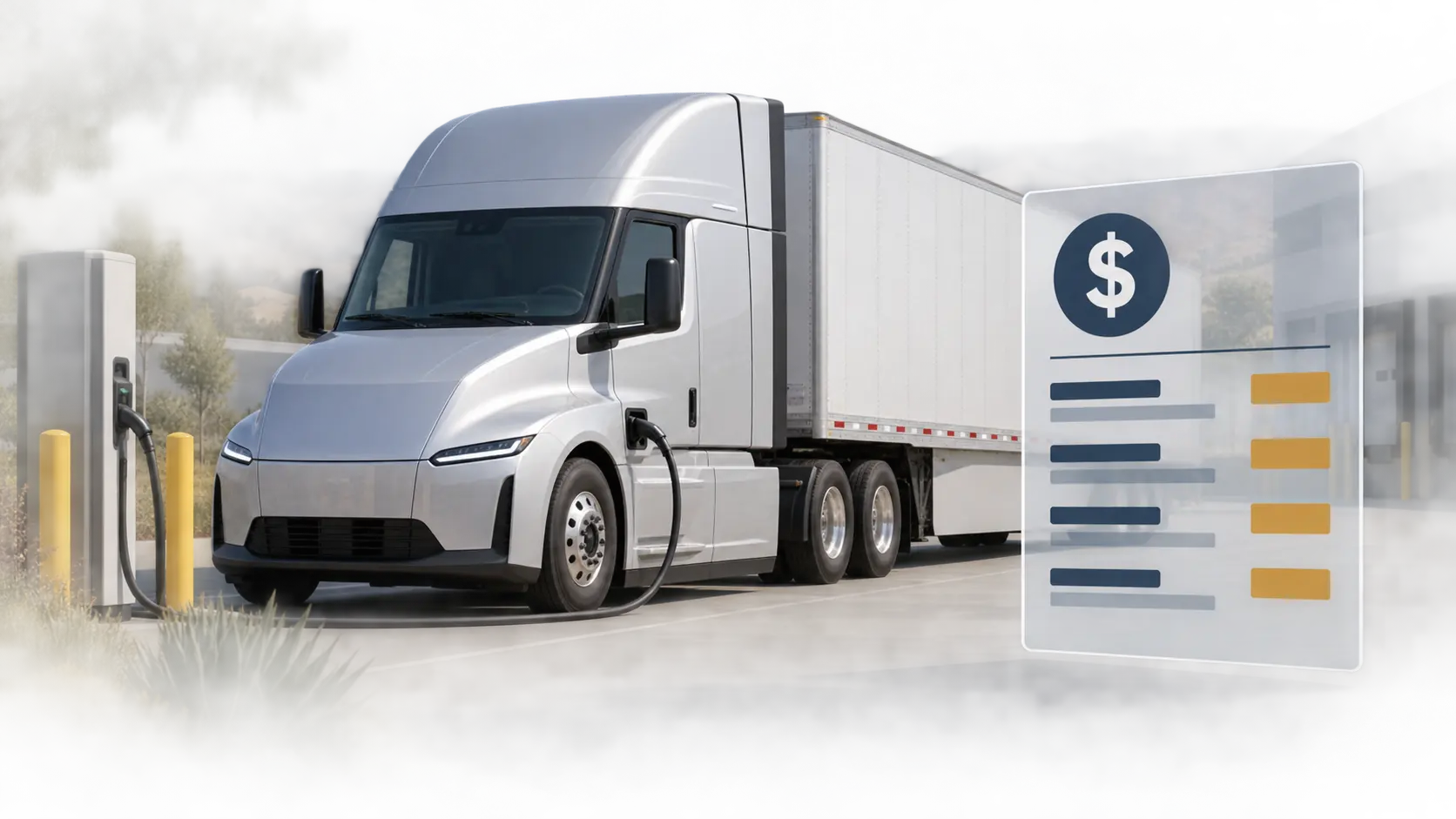
What the new law requires
California Governor Gavin Newsom approved Senate Bill 1213 on September 20, and the Secretary of State filed it the same day as Chapter 349. The operative pricing-transparency requirements begin January 1, 2027; this is a signed law with a future compliance date, not a proposal or immediate purchase mandate.
For specified state zero-emission vehicle incentive programs, an original equipment manufacturer must provide the manufacturer's suggested retail price each quarter for every eligible vehicle model offered in California. The administering agency must also receive a final itemized purchase order identifying the base price and additional equipment or services for each incentive-supported purchase.
Which trucks and programs are covered
The law applies to zero-emission passenger cars, light-duty trucks and medium- and heavy-duty vehicles that may receive incentives through named California programs. For commercial trucking, the practical focus is incentive-eligible medium- and heavy-duty vehicles rather than every electric truck sold in the state.
Agencies must aggregate and anonymize the submitted purchase data and publish it every six months. A manufacturer that does not provide required information can receive notice and an opportunity to cure before a model is suspended from incentive eligibility. The law also permits recovery of funds when required information was knowingly misrepresented.
What it means for fleets and drivers
Fleets and owner-operators considering a California incentive should expect more itemized pricing documentation and should confirm that a model remains eligible before signing a purchase agreement. The disclosure system may help buyers compare base vehicle prices with added equipment and services, but it does not set a truck's sale price or guarantee an incentive award.
The law separately requires the State Air Resources Board to report by January 1, 2028 on alternative financing mechanisms for zero-emission vehicles. Implementation details may continue to develop through program guidance, so buyers should check the administering agency's current rules when applying.
Primary sources and supporting records
- California Legislature: SB-1213 Vehicular air pollution: incentive programsPrimary enacted bill text, chapter status, approval date and compliance dates • Published 2026-09-20 • Checked September 22, 2026 at 5:14 PM
- Transport Topics: California Mandates Electric Truck Pricing TransparencyReputable trucking-industry discovery and commercial-vehicle context • Published 2026-09-22 • Checked September 22, 2026 at 5:14 PM
- Overdrive: California mandates electric-truck price transparencyIndependent trucking-industry corroboration and driver context • Published 2026-09-22 • Checked September 22, 2026 at 5:14 PM
No corrections have been recorded for this article. Read our editorial and corrections policy.