What FMCSA extended
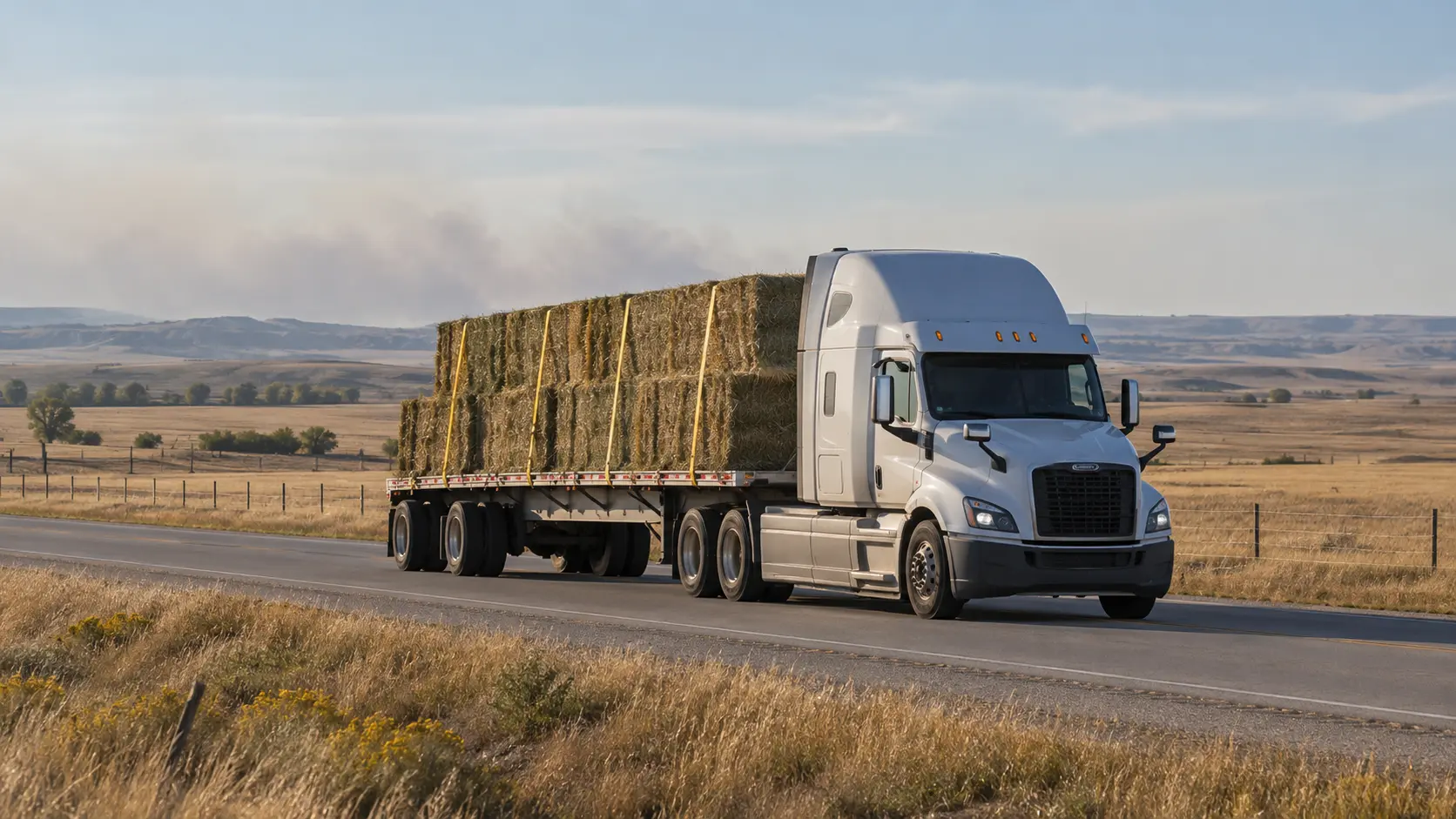
FMCSA issued a new 30-day extension on September 11, 2026, for motor carriers and drivers providing direct assistance to Nebraska's wildfire emergency. The agency said ongoing windblown wildfire activity and severe drought have created an urgent need to haul livestock feed from increasing distances.
The extension is effective immediately and provides limited relief from 49 CFR 395.3, the federal maximum-driving-time rule for property-carrying vehicles. It is scheduled to end when the emergency ends or at 11:59 p.m. Eastern on October 11, 2026, whichever comes first.
On September 15, Nebraska Governor Jim Pillen separately reissued Executive Order 26-19. The governor's office says the state order relaxes hours-of-service and over-dimension restrictions for qualifying commercial-motor-carrier operations supporting farmers and ranchers affected by the wildfires, also through October 11.
Who qualifies — and who does not
The exemption applies only while a carrier or driver is providing direct assistance to the Nebraska emergency. It can apply regardless of where the trip begins, but routine commercial deliveries, long-term infrastructure rehabilitation, and mixed loads carrying only a nominal amount of qualifying relief are excluded.
This is a temporary emergency exemption, not a final rule or permanent HOS change. It does not waive CDL requirements, drug and alcohol rules, hazardous-materials requirements, insurance rules, vehicle size and weight limits, route restrictions, or any regulation not specifically identified in the signed declaration. Drivers and carriers under an out-of-service order are not eligible until that order is rescinded in writing.
What drivers should know when relief ends
Direct assistance ends when the vehicle is used for cargo or services unrelated to the emergency or when the carrier dispatches the driver to begin normal commerce. After that point, the driver and carrier return to the normal 49 CFR 395.3 requirements, although the declaration permits an empty return to the terminal or normal reporting location under its stated conditions.
A property-carrying driver moving from emergency relief to normal operations must take a 10-hour break if combined emergency and normal work reaches at least 14 hours while the driver is transporting property. Carriers should keep dispatch records that show the relief connection and confirm current declaration status before relying on the exemption.
Primary sources and supporting records
- Federal Motor Carrier Safety Administration: MSC - NE - Extension of Emergency Declaration - No. 2026-002 - 09-11-2026Primary signed emergency-declaration extension • Published 2026-09-11 • Checked September 11, 2026 at 5:36 PM
- Electronic Code of Federal Regulations: 49 CFR 395.3 — Maximum driving time for property-carrying vehiclesCurrent hours-of-service rule context • Checked September 11, 2026 at 5:36 PM
- Office of Governor Jim Pillen: Gov. Pillen reissues order relaxing commercial motor carrier operationsPrimary state announcement of reissued Executive Order 26-19 • Published 2026-09-15 • Checked September 16, 2026 at 7:12 AM
No corrections have been recorded for this article. Read our editorial and corrections policy.